Do you ever think about the difference between management and leadership?
After a decade of coaching and working with thousands of leaders, I’ve come to believe we should. But not for the reason you might think.
Back in 1990, Professor John Kotter from Harvard Business School said that most U.S. Corporations are overmanaged and underled, and he urged us to develop our capacity to exercise leadership. Over a decade later, in December of 2001, they republished the article because the problem was still relevant. It should be reprinted again today because we still have a lot of work to do!
But here’s where I part ways with Kotter. He described management and leadership as two distinctive, complementary systems of action, and fueled a dichotomy that is useful in theory but useless in practice.
I think separating the two for understanding is useful, but we must integrate the two disciplines if we want mastery in performance.
What’s the Difference Between Management and Leadership
I see management and leadership as two sides of the same coin. They are expressed differently but made of the same elements. I also think the primary difference between the two exists in our mindset.
Managers tend to focus on planning, pushing, and producing, so they come across as a bit rigid and triangular. They value stability, predictability, and consistency, and like the triangle, which is the most stable shape in geometry, they can be difficult to bend or break. A manager’s mind is anchored in policy, process, and procedure, and they put a great deal of faith in the system and the rules. This is a strength until it isn’t, and I think that is why Kotter pointed out the discipline’s inadequacy.
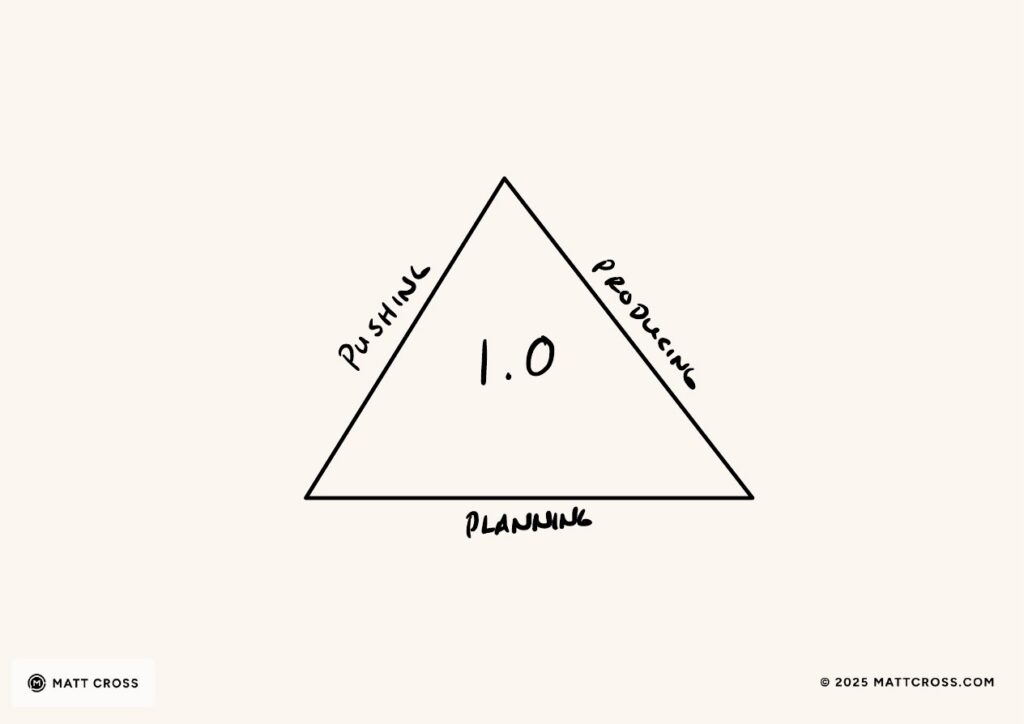
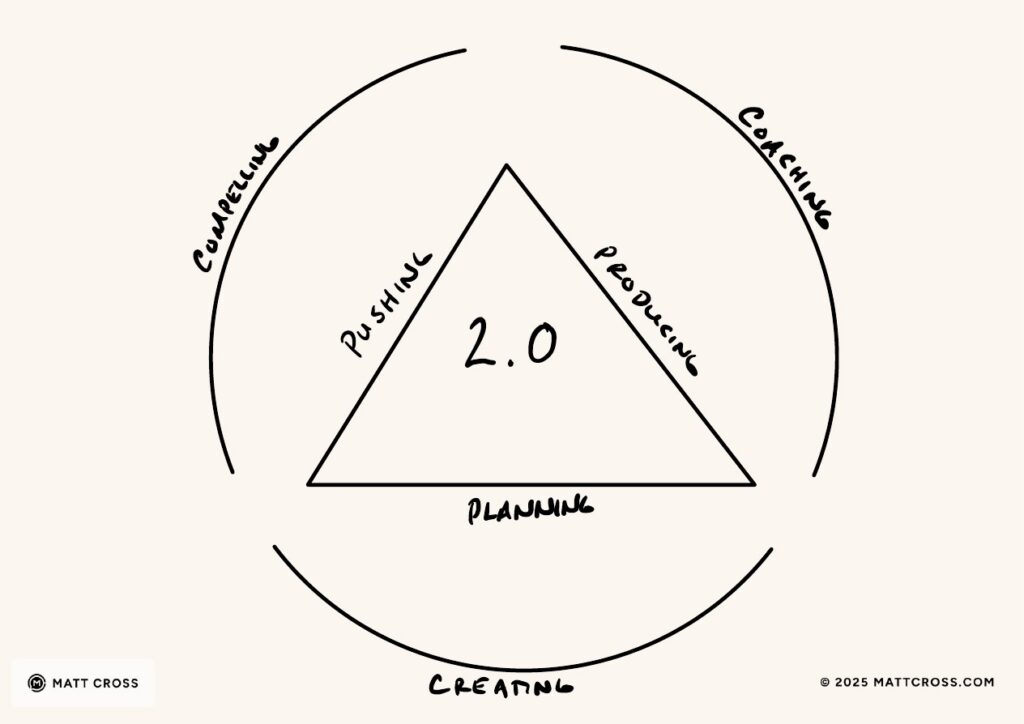
Leadership, on the other hand, looks a lot different. Leaders value creativity, flexibility, and innovation, and like a circle, which is a less stable shape in geometry, they glide over the terrain and move quickly. Leaders put their attention on creating, compelling, and coaching, without worrying if they come across as less stable or less in control than the manager. A leader’s mind rolls across vision, values, and variables, and they rely less on systems and more on teamwork and different capabilities that people bring to the table.
And here is why seeing this as merely a different mindset matters:
If they’re separate systems, as many people believe, you fix the problem by hiring leaders. Our leadership problems are mainly a selection issue.
If they aren’t different at all, as many others believe, you fix the problem by focusing on tasks, skills, and performance. Our leadership problems become a capability issue.
If they’re just two sides of the same coin, you fix the problem by helping the managers you already have evolve and integrate their thinking. Our leadership problems are actually a mindset issue, and our mindset can change.
I believe the third option is the better proposition.
The Subtle Shift
If the difference lives in our mindset, then the way forward isn’t tactical. We need to help our people evolve and adjust how they think and make sense of their roles.
And it all begins with ourselves. We shouldn’t discard the benefits of management in our effort to become great leaders. After all, the triangle, when placed inside the circle, makes the circle stronger. If a leader abandons planning, pushing, and producing in pursuit of becoming that creative, compelling coach, she will become unreliable.
So here are three slight adjustments you can make to put all of this to use:
- Focus on creating before planning. Before you sequence the route, ask whether the destination is worth reaching, or whether it needs to be reimagined altogether.
- Consider the difference between pushing and compelling. Instead of supplying the force, supply the reason, and let the force take care of itself.
- Let producing evolve into coaching. Instead of focusing on productivity and production, make your product the person who can produce the work.
Making these simple changes will help you become a better leader who doesn’t get caught in the management vs. leadership debate. Instead, you’ll just get better at both.